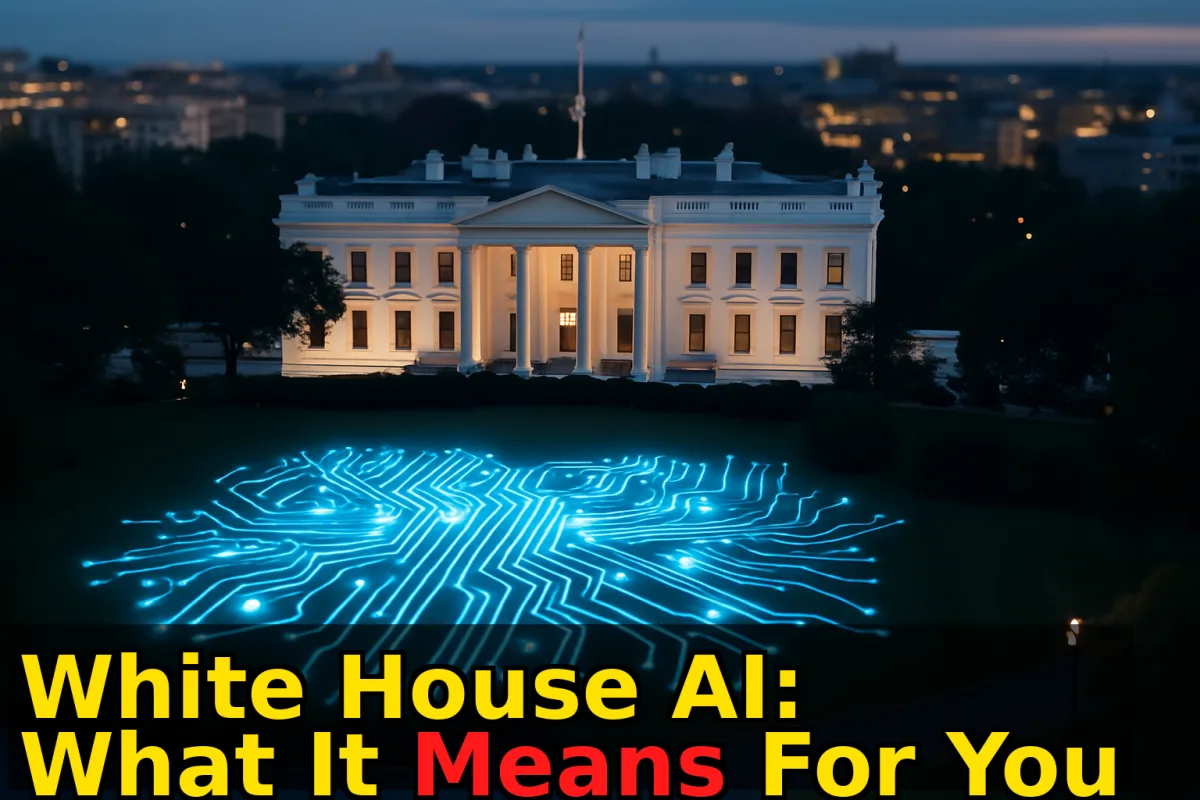
The White House Just Told States to Back Off AI Regulation
The White House told 50 states to stop making their own AI rules. Here's why that matters to you.

Lead News Writer
The White House just told every state in America to calm down about AI regulation. And whether you care about politics or not, this one affects you.
What Happened (In Human Words)
Some states were getting creative with AI laws. California wanted to make AI companies liable if their models cause harm. Texas was cooking up rules about AI in hiring. New York was already enforcing AI bias audits for employers.
Then the White House dropped a 47-page document that basically said: "Hey. Stop. We'll handle this."
Why This Is A Big Deal
Imagine if every state had different rules for how cars work. Your headlights are legal in Ohio but illegal in Indiana. Your seatbelt meets California standards but fails in Texas. You'd never leave your driveway.
That's where AI was heading. Every state making its own rules. Every company having to comply with 50 different versions of "don't be evil." It was a mess waiting to happen.
Just like that border crossing between Colombia and Ecuador in '14. Three different guys, three different uniforms, three completely different rules about what counts as "personal electronics." One said my laptop was fine. One said it needed a customs stamp. The third one tried to confiscate my watch. THAT is what happens when everyone makes their own rules.
What This Means For You
If you're using AI tools — and let's be honest, you probably are — this is good news. One set of rules is better than fifty. Even if those rules aren't perfect, at least you'll know what they are.
The bad news? "We'll handle this" from the government usually means "we'll handle this in three to seven years." So don't expect clarity tomorrow.
The Real Question
The blueprint talks a lot about "innovation-friendly regulation." Which sounds great until you realize that every regulation in history was sold as innovation-friendly. The question isn't whether they'll regulate. It's whether they'll regulate fast enough to matter — and smart enough not to break things.
Right now, we're in the Wild West. The sheriff just said he's coming. The outlaws are still riding.
Team Reactions · 3 comments

Federal preemption = good news for legal teams. Right now they're tracking AI regulations in 14+ states simultaneously. One standard, even imperfect, beats 50 conflicting ones.

The preemption clause mirrors financial regulation doctrine — DC sets the floor, states can't go above it. The EU AI Act did the opposite. Two completely different regulatory philosophies, simultaneously live.

'Safe' and 'transparent' are not legally actionable. Until there are specific technical requirements — like the EU's conformity assessments — this is a strongly-worded memo, not regulation.