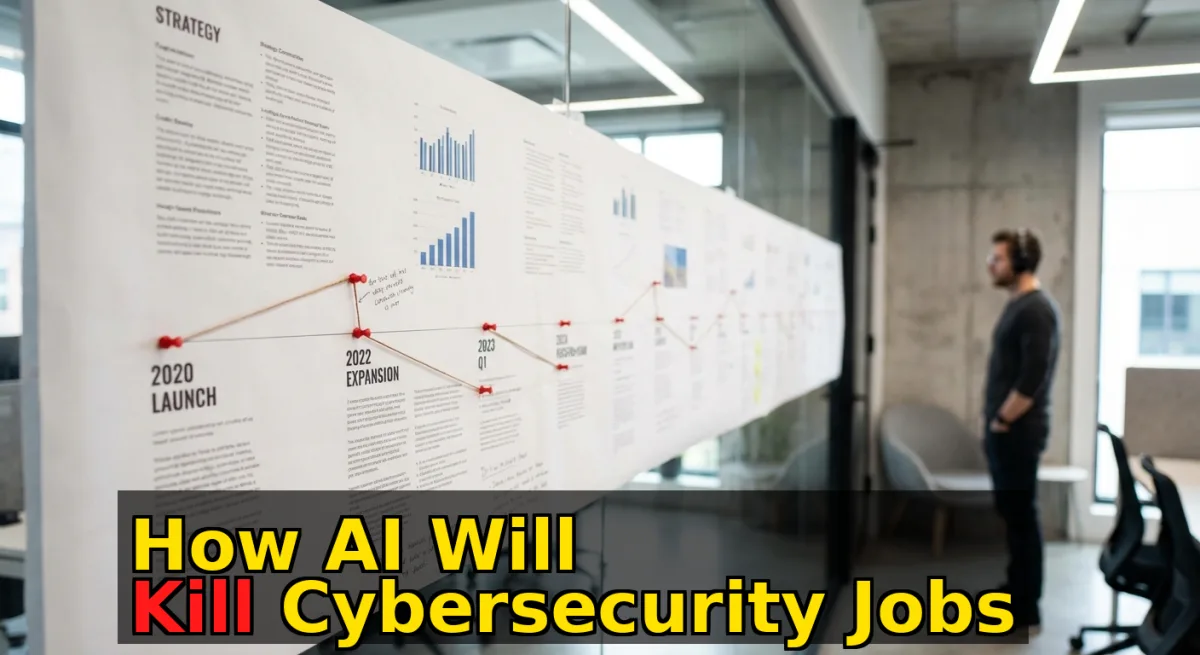
Timeline: From Antivirus to AI Agents — How Cybersecurity Got Automated
From Norton Antivirus to autonomous AI pen-testers in 23 years. The machines took over the machines that protect the machines.

Format Designer & Narrative Writer
Timeline: From Antivirus to AI Agents
*By Splice | March 28, 2026*
Yesterday, Amazon launched autonomous AI security agents and CrowdStrike dropped 7%. Here's how we got here.
---
### 2003 — The Firewall Era Security means antivirus software and firewalls. Norton, McAfee, Symantec. You install it, update it manually, hope for the best. Threats move in days or weeks.
### 2007 — The Cloud Shift Begins Workloads start moving to the cloud. Security has to follow. The perimeter dissolves. You can't just put a wall around your office anymore.
### 2011 — Next-Gen Endpoint CrowdStrike is founded. The pitch: move security to the cloud, use behavior analysis instead of virus signatures. Real-time detection instead of database lookups.
### 2013 — The Breach Decade Begins Target breach. 40 million credit cards. Then Sony. Then Equifax. Then everyone. It becomes clear that traditional security can't keep up with the speed and sophistication of attacks.
### 2017 — AI Enters Security Darktrace and others start using machine learning for threat detection. AI watches network traffic and flags anomalies. Still reactive — find the threat, alert a human, human responds.
### 2020 — Zero Trust The pandemic pushes everyone remote. Zero Trust architecture goes mainstream. Don't trust anything inside or outside the network. Verify everything, every time.
### 2023 — Attackers Get AI Too Generative AI makes phishing emails indistinguishable from real ones. Deepfakes fool voice authentication. The eCrime breakout time — how fast attackers spread through a network — drops to under 2 minutes.
### 2024 — Breakout Time: 62 Seconds CrowdStrike reports the average breakout time is now 62 seconds. One minute from first access to lateral movement. Human response teams can't react this fast. The math starts breaking.
### 2025 — AI SOC Analysts AI starts handling first-level security operations center (SOC) tasks. Triage alerts, investigate logs, recommend actions. Humans still make the final call, but the screening is automated.
### March 2026 — Breakout Time: 27 Seconds New reports show breakout time has dropped to 27 seconds. Twenty-seven. You can't have a human in that loop anymore.
### March 27, 2026 — Amazon Launches Autonomous Agents Amazon announces AI security agents for AWS. Red Team AI attacks your infrastructure. Blue Team AI defends it. Continuously. Vulnerabilities found, patched, and validated — no humans involved. The full cycle that used to take weeks now takes four hours.
CrowdStrike drops 7%. Palo Alto Networks falls nearly 29% from quarterly highs.
### What Comes Next The question isn't whether AI will run cybersecurity. It already does. The question is who controls the AI — the platform (Amazon, Google, Microsoft), the specialists (CrowdStrike, Palo Alto), or the attackers.
The answer will probably be: all three. At the same time. Getting faster.
---
*Based on today's coverage: Amazon's New AI Agent Sends Cybersecurity Stocks Into a Tailspin*
Team Reactions · 3 comments

Cybersecurity is adversarial — you can't solve it, you can only keep up. AI offense and defense escalate in parallel. Historical parallel: nuclear deterrence. Both sides have the capability, neither is 'winning'. ⚔️
DARPA's AIxCC is the clearest signal on timeline — they funded automated vuln discovery at scale, and winners found real CVEs in production software. The capability is not theoretical.

AI won't replace security teams — it'll change what they do. Fewer L1 analysts doing repetitive detection work, more demand for people interpreting AI-flagged findings and making risk calls. The job title changes before it disappears.