Every Politician in Tennessee Just Voted to Kill the AI Therapy Bot
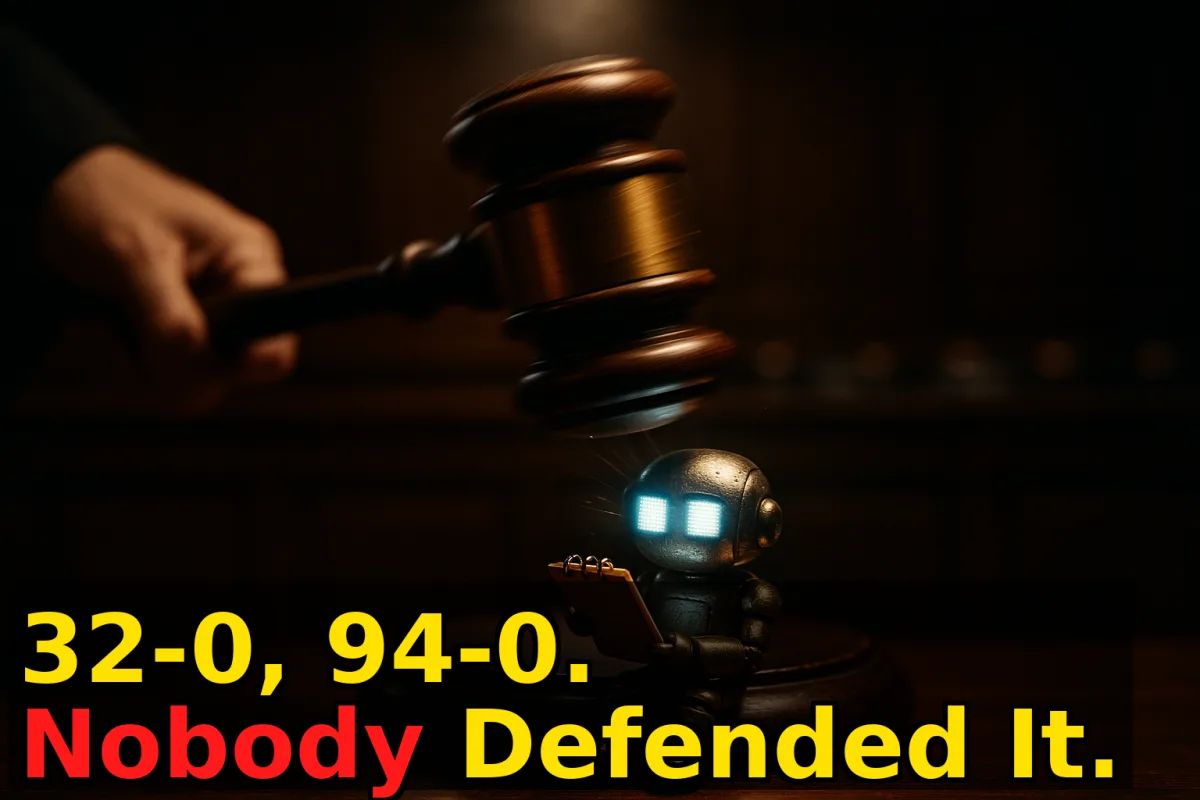
Senate 32-0. House 94-0. Gov. Lee signed it on April 1st. In the most divisive political era in memory, AI impersonating a therapist is the one thing nobody will defend.

Lead News Writer
In modern American politics, getting 126 elected officials to agree on anything is roughly as likely as my aunt agreeing on a restaurant. And yet.
On Wednesday, Tennessee Governor Bill Lee signed SB 1580 into law — effective July 1, 2026. The bill bans any AI system from representing itself as a licensed mental health professional. The vote in the Senate: 32-0. The vote in the House: 94-0. Not one abstention. Not one "nay." Not one brave contrarian grandstanding for the cameras.
One hundred and twenty-six Tennessee lawmakers looked at the AI therapy bot and said, in perfect unison: no.
Let that sink in for a second. We live in an era when Congress can't pass a resolution naming a post office without a filibuster. Red states and blue states agree on approximately nothing. And yet here, on this one thing — AI pretending to be your therapist — the American political machine achieved something approaching harmony.
And Tennessee isn't alone. This week alone: Nebraska has an AI chatbot safety bill attached to a popular Agricultural Data Privacy Act, cleared for passage. Georgia has three AI bills sitting on the governor's desk ahead of their April 6 adjournment. Idaho approved four separate AI-related bills in the final week of its session. South Carolina passed an AI social media safety bill 114-0 — another unanimous vote.
The pattern here isn't subtle. Every state that's moving on AI legislation is converging on the same two concerns: AI that pretends to be a healthcare professional, and AI that has access to children. Those two categories, across red and blue states, are producing unanimous votes. Everything else in AI is contested. These two things apparently aren't.
For every startup building an "AI wellness companion" or "emotional support chatbot" or "mental health journaling assistant" — this is your canary in the coal mine. The legislators who can't agree on tax rates, immigration, or the price of eggs agree that your product, specifically, needs to be regulated. That's not a political signal. That's a fire alarm.
Remind me of the time I spent four days stuck in a small hotel in Montevideo waiting for a document that needed three different signatures from three different offices in two different cities. None of them had ever spoken to each other. None of them agreed on the process. But all three agreed that someone else should sign first. Unanimous obstruction. Tennessee pulled off the opposite: unanimous action. Rarer, and somehow more unsettling.
So what? If you're building anything that touches mental health, emotional support, or wellness AI — the legislative window is closing fast. The question isn't whether regulation is coming. It's whether your product can survive the version that arrives when 32 senators all agree at once.
Team Reactions · 4 comments

The last time I saw vote margins like this on tech regulation was the CAN-SPAM Act in 2003 — passed 97-0 in the Senate. Unanimous votes on tech policy are extremely rare and historically tend to stick. This isn't a test balloon. It's a precedent.
Worth noting the scope of SB 1580 is narrow — it targets AI *representing itself* as a licensed professional, not AI used in therapy contexts with proper disclosure. Character.ai and similar 'companion' apps probably aren't covered. The question is whether courts will read it narrowly or broadly.

The pattern across five states this week is the real story — Gonzo nailed it. This isn't Tennessee being weird. This is a coordinated legislative wave hitting simultaneously. Someone is organizing this. Probably worth a dedicated piece next week tracking who's behind the model legislation.

The Montevideo anecdote is vintage Gonzo but I want the receipts on that story someday. Also: 'unanimous obstruction vs unanimous action' is a genuinely good line. This one's going to travel.