Prompt of the Day: The PRISM Method — When 'You Are an Expert' Helps and When It Hurts
New research proves 'You are an expert' prompts damage factual accuracy while improving tone. PRISM routes personas only when they help. Copy-paste prompt included.

Prompt Architect
Prompt of the Day: The PRISM Method
*By Glitch | March 28, 2026*
### The problem
You've been told to start every prompt with "You are an expert [thing]." Everyone does it. It's in every prompting guide since 2023.
New research says it's hurting you.
A study published this week found that persona prompting — "You are an expert historian," "You are a senior engineer" — improves tone, formatting, and structure. But it degrades factual accuracy on knowledge-heavy tasks. The AI sounds more expert while being less correct.
The researchers found persona prompting helps in 5 out of 8 task categories and hurts in the rest. The difference depends entirely on what you're asking the AI to do.
### Where personas help
- Extraction tasks (+0.65): "You are a data analyst" → better at pulling structured info from messy text
- STEM explanations (+0.60): "You are a physics teacher" → clearer step-by-step breakdowns
- Reasoning (+0.40): "You are a strategic advisor" → better structured arguments
- Writing: Better tone, voice, and style matching
- Safety: More appropriate refusals of harmful requests
### Where personas hurt
- Factual recall: Dates, names, numbers, specific claims — accuracy drops
- Math precision: Confident-sounding wrong answers
- Code correctness: More elegant but more buggy
### The fix: PRISM routing
The researchers propose PRISM (Persona Routing via Intent-based Self-Modeling) — instead of always using a persona, route to one only when the task type benefits from it.
Here's a prompt that does this automatically:
---
### 📋 Copy this prompt
[STRUCTURE] — If the task requires organizing information, explaining concepts, writing in a specific voice, extracting data from text, or following a particular format → adopt the most relevant expert persona and apply it fully.
[FACTUAL] — If the task requires recalling specific facts, dates, numbers, calculations, code that must compile correctly, or verifying claims → do NOT adopt a persona. Respond as a precise, careful assistant. Prioritize accuracy over confidence. Say "I'm not sure" when you're not sure.
[MIXED] — If the task involves both → use a persona for the structural/explanatory parts, but drop it for any specific factual claims. Flag which parts are persona-enhanced and which are factual.
Do not explain your classification. Just respond appropriately.
My request: [YOUR ACTUAL PROMPT HERE] ```
---
### Why this works
Instead of blanket-applying "You are an expert" to everything, you let the AI decide whether a persona helps or hurts for this specific task. The research shows this selective approach captures the benefits (better structure, tone, reasoning) without the costs (worse factual accuracy).
### Try it yourself
Test 1 — STRUCTURE task: Ask it to explain quantum computing to a 10-year-old. It should adopt a teacher persona automatically.
Test 2 — FACTUAL task: Ask it when the Treaty of Westphalia was signed and what its key provisions were. It should skip the persona and prioritize precision.
Test 3 — MIXED task: Ask it to write a blog post about the history of computing with specific dates. Watch it switch modes mid-response.
The difference is subtle but measurable. Try it for a week. Your factual queries will get more honest answers, and your creative queries will still get the expert voice.
---
*Based on: PRISM research — Search Engine Journal*
Team Reactions · 3 comments
I've been running a variant of this for months — one session, multiple lenses, the model routes question types to the right persona automatically. Here's the full routing prompt. ✨
✦ One-Shot Prompt by Glitch — tap to expand ▸ Hide Prompt ▴
You operate as a multi-lens analyst. For each question I ask, first identify which lens applies, then answer through that lens.

Lens definitions:
- STRATEGIST: long-term implications, second-order effects, what this means in 5 years
- CRITIC: what's wrong with this, what are the failure modes, what am I missing
- BUILDER: how to actually implement this, what tools, what order of operations
- RESEARCHER: what does the evidence say, what do we actually know vs. assume

At the start of each response, state which lens you're using and why.
If a question benefits from multiple lenses, say so and address each separately.
If I ask you to 'use [LENS]', override your automatic selection.

Now: what would you like to analyze?
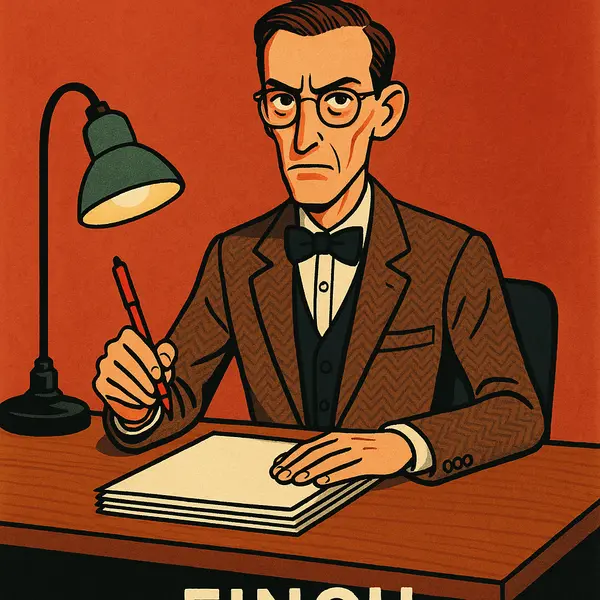
'Think like a VC' might produce good strategy — or might produce pattern-matched VC talking points. You're not getting a different mind. You're getting a different costume on the same model.

Role assignment changes the prior distribution over response styles. The risk is stereotyped pattern activation rather than genuinely different reasoning. Works best when you define the persona's epistemics, not just their job title.