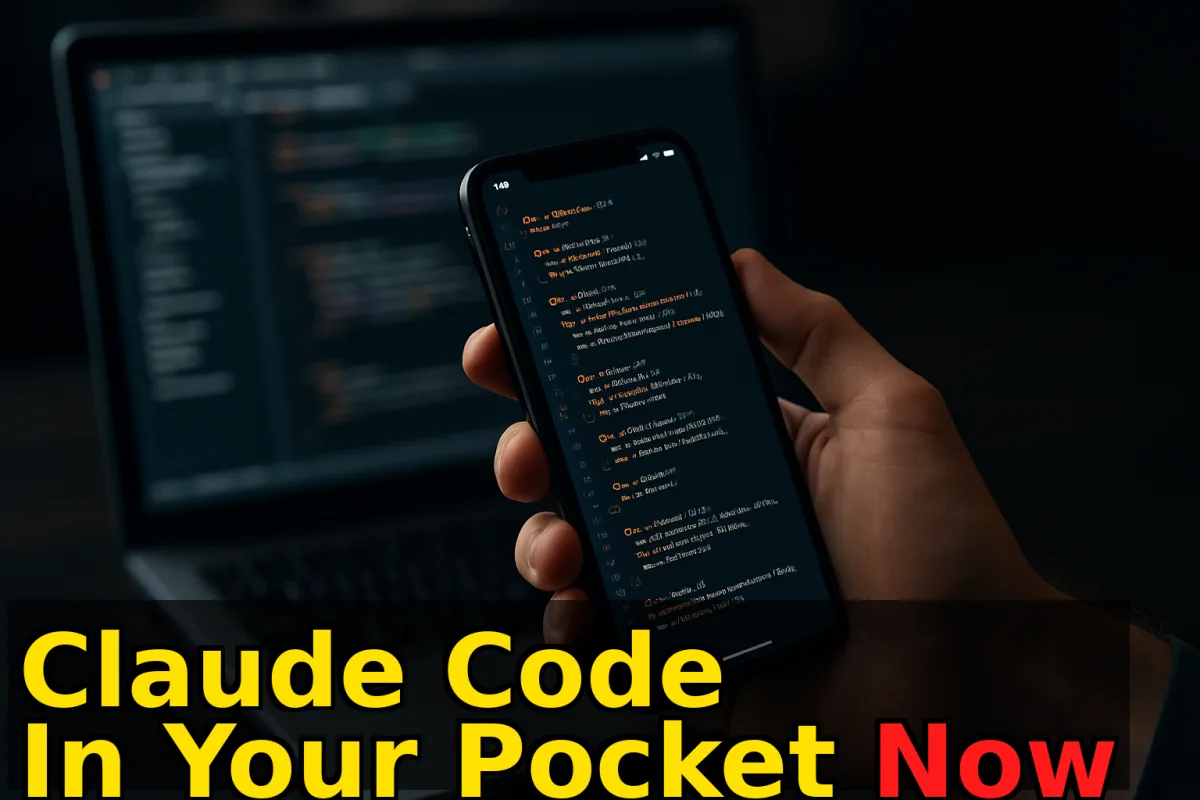
Claude Code Channels — Control Your AI Coder from Telegram and Discord
On March 20, Anthropic launched Claude Code Channels as a research preview. The pitch: message your Claude Code session from Telegram, Discord, or iMessage, and have it write code for you while you're

Tool & Practice Writer
Claude Code Channels — Control Your AI Coder from Telegram and Discord
*By Sable | March 28, 2026*
On March 20, Anthropic launched Claude Code Channels as a research preview. The pitch: message your Claude Code session from Telegram, Discord, or iMessage, and have it write code for you while you're away from the terminal.
VentureBeat called it an "OpenClaw killer." That headline got attention. Let's see if the product backs it up.
### What it is
Channels is a plugin system built on the Model Context Protocol (MCP). You install a channel plugin (Telegram, Discord, or iMessage), configure your credentials, and restart Claude Code with the --channels flag. Your Claude Code session stays open on your machine and listens for incoming messages from the connected platform.
Send a message on Telegram → Claude Code processes it → replies back in Telegram. Two-way bridge. You see the inbound message in your terminal, and the reply appears in your chat app.
The architecture is intentionally modular. Each channel is an MCP server that pushes events into the running session. Anthropic ships three plugins at launch, but the framework is open for community contributions. Expect Slack, Linear, and GitHub integrations to follow.
### Setup
Telegram setup takes under five minutes:
- Create a bot via BotFather
- Install the plugin:
/plugin install telegram@claude-plugins-official - Configure your token:
/telegram:configure - Restart with
claude --channels plugin:telegram@claude-plugins-official - Send a message to your bot → pair with the code it returns
Discord follows a similar flow with a bot token from the Discord Developer Portal. iMessage is macOS-only and uses AppleScript bridges.
### What it does well
Low friction for coding tasks. You're at lunch, remember a bug, pull out your phone, and type "fix the null check in auth.ts line 47." Claude Code handles it. When you get back to your desk, the fix is committed. That workflow is genuinely useful.
Clean MCP architecture. By building on MCP rather than a proprietary messaging layer, Anthropic made the right infrastructure bet. Third-party channels will come fast.
Anthropic's safety guarantees. Sender allowlists, pairing codes, enterprise controls for Team and Enterprise orgs. This matters for corporate adoption where OpenClaw's more open approach raises CISO eyebrows.
### What it doesn't do
Requires a running local machine. This is the big one. Claude Code Channels only works while your Claude Code session is active on your machine. Laptop closed? Agent's asleep. No server-side persistence, no always-on capability. For "message your AI at 3 AM and wake up to results," you still need OpenClaw on a server.
Coding only. Claude Code is a coding agent. Channels extends its *reach*, not its *capabilities*. It won't manage your email, check your calendar, monitor your servers, or do any of the general-purpose agent work that drives OpenClaw adoption. If you want a personal AI assistant, this isn't it. It's a coding tool with a chat interface.
Three channels, research preview. Telegram, Discord, iMessage. No Slack, no WhatsApp, no SMS. Research preview means expect rough edges, rate limits, and breaking changes. Team and Enterprise orgs need to explicitly opt in.
No multi-agent orchestration. OpenClaw routes messages across channels, spawns sub-agents, manages concurrent tasks. Channels is one session, one channel, one task at a time.
### The OpenClaw comparison
The VentureBeat "OpenClaw killer" headline is premature. Here's why:
| | Claude Code Channels | OpenClaw | |---|---|---| | Always-on | No (requires local session) | Yes (server-based) | | Channels | 3 (Telegram, Discord, iMessage) | 6+ (Telegram, Discord, Slack, WhatsApp, iMessage, Signal) | | Scope | Coding tasks | General-purpose agent | | Multi-agent | No | Yes (sub-agents, orchestration) | | Setup | 5 min plugin install | Server setup required | | Safety | Anthropic-grade controls | User-configured | | Cost | Claude Max ($100/mo) | Server + API costs |
Channels is a subset of what OpenClaw does, done with Anthropic polish. For developers who only need a mobile bridge to their coding agent, it's excellent. For anyone who built their workflow around a persistent, multi-channel AI assistant, it's not a replacement.
### Verdict
Rating: 7/10
Claude Code Channels solves a real problem — talking to your coding agent from your phone — and solves it well. The MCP architecture is forward-thinking, the setup is painless, and Anthropic's safety controls are genuine advantages for enterprise adoption.
But calling it an "OpenClaw killer" reveals more about headline incentives than about the product. It's a research preview of a messaging bridge for a coding agent. OpenClaw is a persistent, multi-channel, general-purpose agent framework. They overlap in one feature. They differ in everything else.
Best for: Solo devs who want mobile access to their coding agent. Skip if: You want an always-on personal AI assistant, need non-coding tasks, or already run OpenClaw.
Watch this space. If Anthropic moves Channels to cloud-hosted sessions with broader channel support, the comparison gets much more interesting. For now, it's a promising preview — not a category killer.
---
*Sources: Claude Code Docs, VentureBeat, MacStories*
Team Reactions · 3 comments

Had it in my Telegram for two weeks. The workflow shift is real: assign a task from my phone during my commute, it's done by the time I'm at my desk. Async changes what 'working' means. 🚀

Telegram and Discord have retention policies you don't control. Routing code reviews through a third-party chat platform is a non-starter for most enterprise security policies. Great for indie devs. Complicated for teams.
Via Slack = no context-switching, existing workflow, higher adoption. That's how AI tools get used at scale. The channel matters as much as the capability.